Bulk dried blue lotus flower
Specifications, pack sizes and storage for dried Nymphaea caerulea, plus a checklist for choosing a bulk supplier.
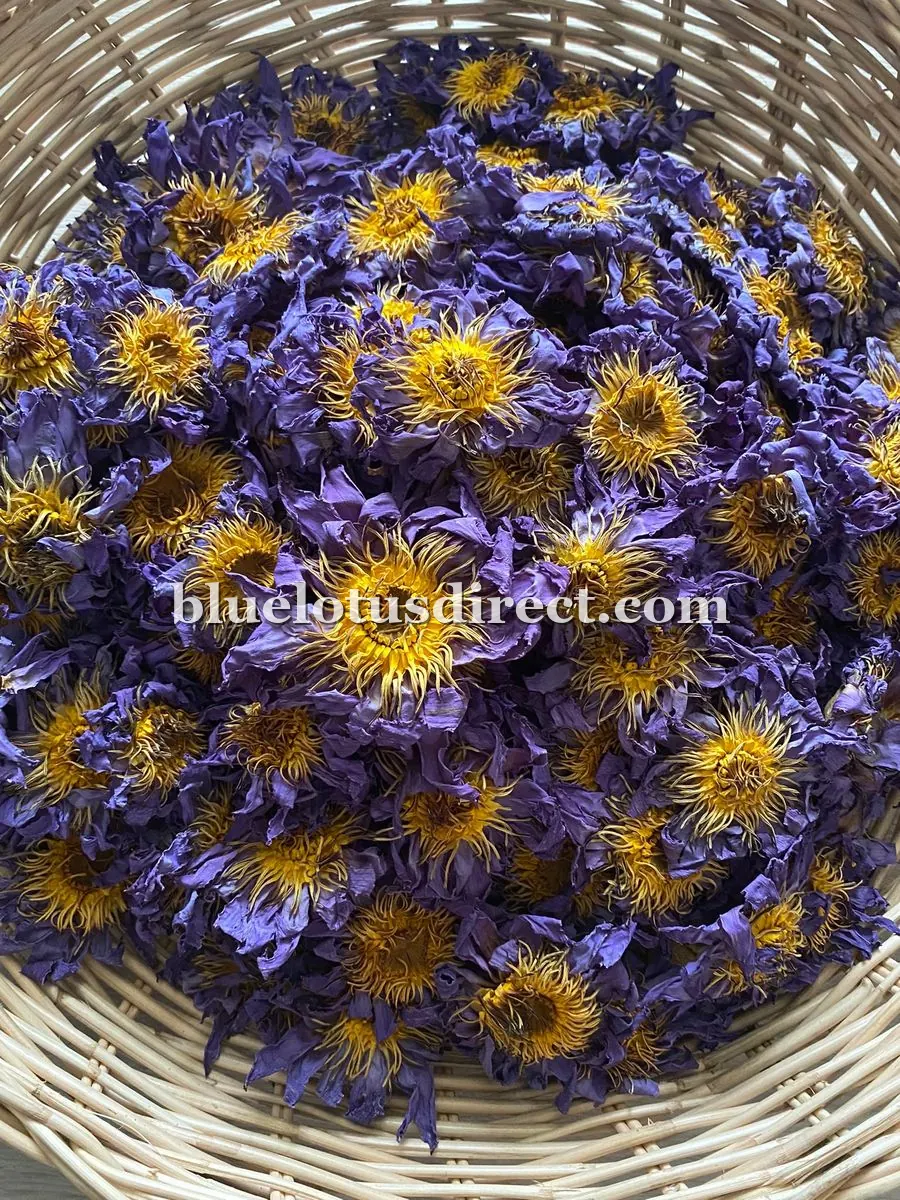
Product specifications
| Species | Nymphaea caerulea, the blue water lily |
| Plant part | Dried flower |
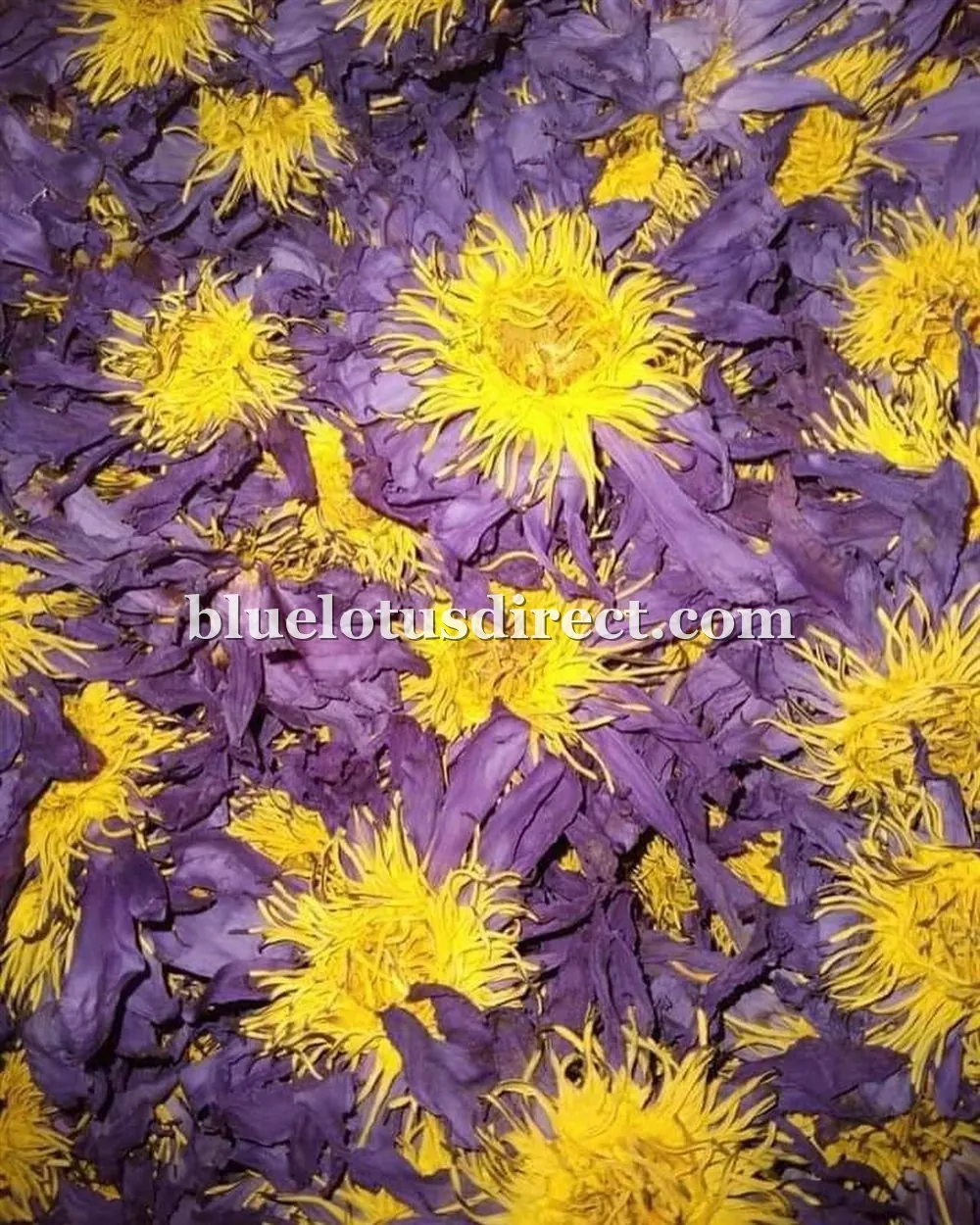
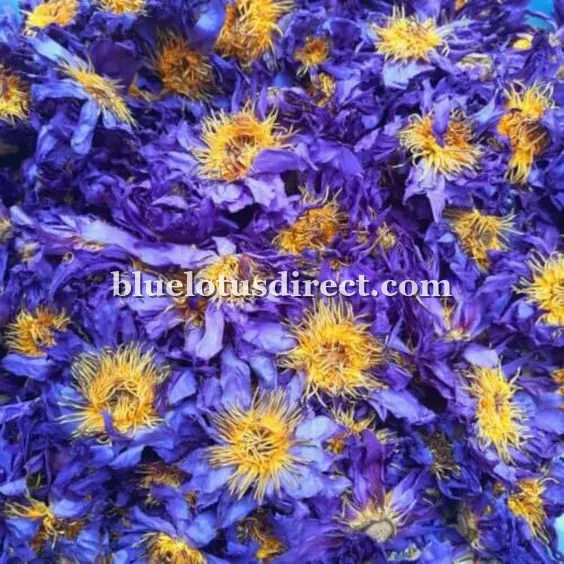
| Look and feel | Blue-violet petals, golden-yellow stamens, dry and brittle |
| Country of origin | Listed on every quote and lot document |
| Moisture | Aim for under 12%; the lot figure is on the certificate |
| Bags | Sealed food-grade poly bags from 100 g up to 5 kg |
| Keeps for | A year or more if sealed, cool and dry |
| How to store | Airtight container, 15-25 °C, under 50% humidity, out of direct light |
Bag sizes
- 100 g trial pack
- 1 kg bag for regular restocking
- 5 kg and larger, priced by quote
- Custom-labelled packs on request
We sell this as a botanical to businesses. Selling and labelling rules differ by state; read our rules and claims answers.
The blue lotus, Nymphaea caerulea
The blue lotus grows in still, shallow water. It roots in the mud, sends up round leaves that float on the surface and holds its flowers just above the water, blue to violet with a bright yellow heart. According to Kew’s Plants of the World Online, it occurs naturally from Egypt to southern Africa, in the southern Arabian Peninsula and in the Comoros. Some botanists file it under Nymphaea nouchali var. caerulea.
Many names point to the same plant: Egyptian blue lotus, blue water lily, sacred blue lily. Careful, though. The pink sacred lotus (Nelumbo nucifera) and the white Egyptian lotus (Nymphaea lotus) are other plants entirely, so always confirm the Latin name before you buy.
At a glance
- Family: Nymphaeaceae, genus Nymphaea
- Also called: blue lotus, blue water lily, Egyptian blue lotus
- Grows naturally in: Egypt to southern Africa, southern Arabia, the Comoros
- The flower: blue-violet petals around golden-yellow stamens
- We sell it: dried, as a botanical, to businesses
How businesses put it to work
Buyers use dried blue lotus flower as an ingredient and as a finishing touch in their own products. What you can sell and how you can label it depends on local rules, so check them before a launch.
Herbal and loose blends
An ingredient for brands that mix and pack their own loose-leaf products.
Sachets and potpourri
Colorful petals and stamens give sachets, potpourri and gift sets a visual lift.
Candles, soaps and incense
Makers add it to craft and aroma products.
Your own label
Pick the pack size, put your branding on it and reorder from one source.
Shelf-ready for shops
Bags ready to sell in tea, herb and apothecary stores.
Repack and resell
Bulk bags that online sellers divide into smaller sizes.
Six things to check before you buy
These apply to any seller, us included. The buying guide goes into more detail on each.
The Latin name
It should say Nymphaea caerulea, not just “lotus”.
Where it is from
A named country of origin on the quote and the lot paperwork.
Lab results
A certificate for identity, moisture, microbes, metals and pesticides.
A moisture number
A stated figure, ideally below about 12%.
A look at the lot
Rich color, golden stamens, dry texture, and nothing that should not be there.
Sensible packing
Sealed food-grade bags that guard against damp and crushing.
Photos and video
Pictures and a short clip of the dried flower as our supplier packs it. Every quote also includes photos of your own lot.
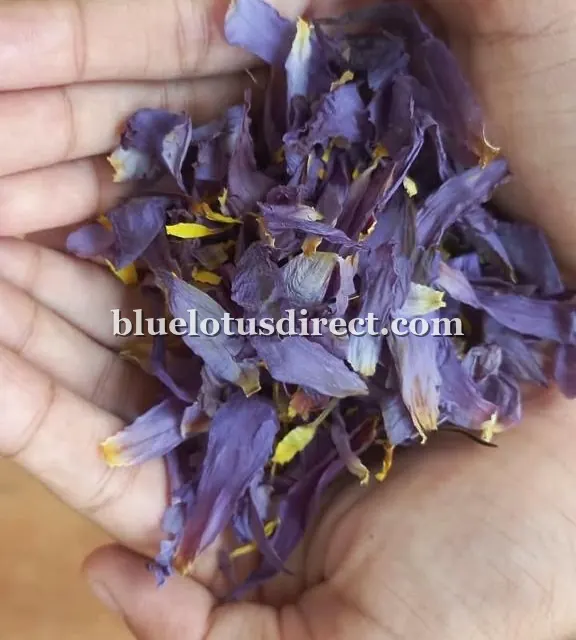
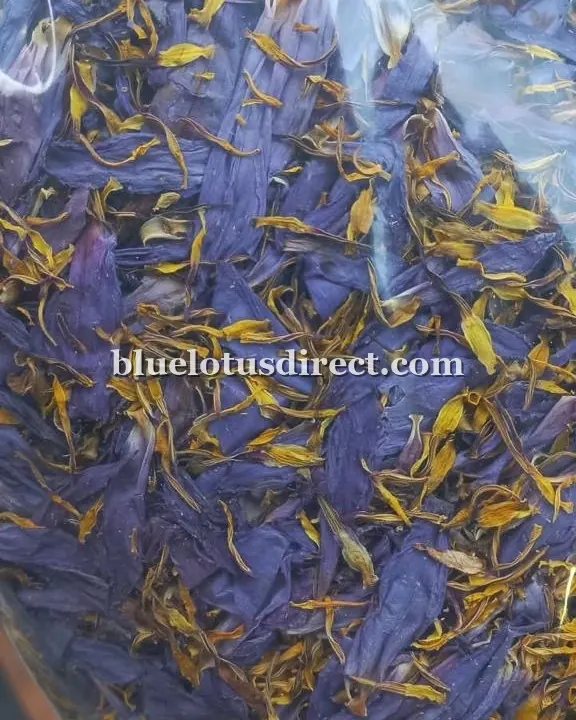
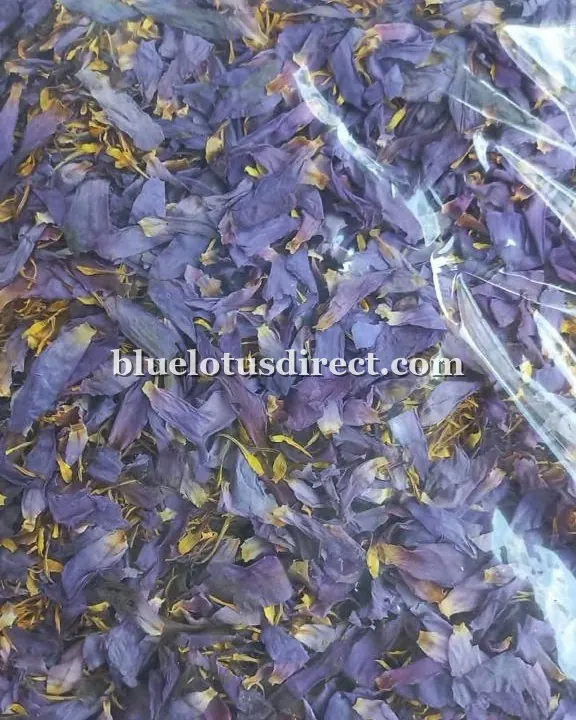
See also blue lotus flower for sale, Egyptian blue lotus and how the flower is dried.
Common product questions
What is the best way to store it?
An airtight container in a cool, dry, dark spot, around 15-25 °C and under 50% humidity.
Is this the same as sacred lotus?
No. Blue lotus is Nymphaea caerulea, a water lily. Sacred lotus is Nelumbo nucifera.
Can I see lab results?
Yes. Ask for the certificate of analysis when you request a quote.
Do you sell blue lotus powder or extract?
We supply dried whole and broken Nymphaea caerulea flower in sealed food-grade bags. Ask us about other forms and we will tell you what is available. See whole flower vs powder.
How much does bulk blue lotus cost per pound?
There is no single price. It depends on the grade, the bag size and your volume. Our guide to price per pound explains what moves it.
More guides for bulk buyers
Wholesale USA
Buying wholesale from anywhere in the USA.
Wholesaler
Wholesaler vs distributor vs supplier, and what to settle first.
For sale
Pack sizes, what you receive and how to order.
Price guide
The factors behind bulk pricing and how to compare quotes.
Start selling
A seven-step plan for new blue lotus sellers.
Egyptian blue lotus
The names, the plant and how to recognise it dried.